
I’m honored to have written the Forward to Lincoln Beauchamp’s book UnConvenience No Mo.
Forward

In the aftermath of World War I, American artists, specifically African American artists, established themselves in Europe as an alternative to the repressive racism forced upon them in America. Beginning with Sidney Bechet and Josephine Baker, new possibilities arose for expatriates as new roots became possible. This significant part of American history played out over the remainder of the 20th Century but as the last few decades passed Lincoln Beauchamp aka Chicago Beau lived out another kind of experience. He experienced the American community in France but didn’t stop there. Rather, he found his way around the world absorbing cultures that he must have only dreamed of as a child. As it turns out, he broadened the European experience with his time in Italy and Greece and into Africa. He’s become important to the music scene in Iceland. He’s also had the Canadian experience in Montreal and Toronto. He has family in Toronto; a daughter, granddaughter, and other relatives. This has created a kind of cross-border intercultural vibe that is ongoing. And, he’s continued with his American adventure in Chicago, California and now Kansas City.
As a cultural anthropologist, I often describe culture as the things that groups of people know and do. Different people know and do different things. Their cultures are wildly dissimilar. The truth is, it’s not a simple matter to move from culture to culture but, Beau has the instincts of an anthropologist. He understands cultural distinctions. He knows that a compliment in Paris can be an insult in Oakland. He knows that the values that define relationships are not the same everywhere. This, I think, at least partly explains his ability to survive and thrive as he moves around the world forging a lifestyle that adds new dimensions to being an American expatriate in Europe.
Beau’s upbringing in Chicago was his first exposure to American cultures both mainstream and African American. That led him to a clear understanding of the racism in the U.S. It also prepared him for the differences he found in Europe. In some ways, Europe’s racism is more complicated. Josephine Baker was celebrated as a dancer but was never allowed to transcend her role as an entertainer and be accepted into the inner circles of French social life. The art of Africans and African Americas was studied and appreciated even as the artists were subjected to some kind of exoticism. I remember that shortly after my arrival in Paris in 1997 I met a couple of teenagers who were fully conversant in the discography of Pharoah Sanders. Try finding any America teens with that knowledge. So, there is an appreciation of African American culture. And, certainly post-World War I stories about French citizens defending African American soldiers from the racist outbursts of white Americans in France are many . Yet Beau is no romantic. He describes the treatment of American musicians recording in Paris by record company executives who thought they could get away without paying per their contract. He also tells us about the “barrage of racist insults” spewed by British tourists in Nairobi. This kind of worldview can only be gained by the lived experiences of a man moving about the world and using his intelligence and education to interpret it. You are getting an important set of reflections that developed because of his keen self-awareness and sensitivity. Beau has highly developed listening skills that help him understand people and that paired with his masterful storytelling engage us through these pages.
Beau’s career has strolled all over the map, much as his travels have. From music to the stock market, the photography business and publishing, all have combined to provide income when he needed it. It’s extraordinary, when you think about it, how one comes to be successful in so many different fields. Being able to communicate with such divergent people, it is no wonder that he is an effective writer and teacher.
I met Beau backstage at the Chicago Jazz Festival in 2009 when I was visiting one of my mentors, Archie Shepp. Beau had a relationship with Shepp that went back to at least the summer of 1969 in Paris when they recorded Shepp’s Blasé album. It was a time of great social unrest and a civil rights movement that was on both sides of the Atlantic in 1969. A few months later they recorded Black Gipsy. That album was supposed to be issued under the name of Chicago Beau, but the record company pulled it out from under him by putting Archie on the cover as the leader. There was no resentment toward each other by these artists but rather an awareness of dirty games that can be played by businesses even after contracts are signed. I was not expecting to meet Chicago Beau in that dressing room in Chicago, but I knew his work well after first hearing Black Gipsy on the Amherst College radio station back in the 1980s. From there I immersed myself into a Black Gipsy listening experience that spanned decades with that record.
While Beau started his recording career with Shepp, he’s gone on to make important recordings as a leader and with the Art Ensemble of Chicago, Sunnyland Slim and Jimmy Dawkins. His songwriting is grounded solidly in the blues, yet he is not afraid to bring his subject matter into the contemporary political realm in which he is an advocate for culture change.
Following that meeting with Shepp, I invited Beau to teach some writing courses at Harper College to capitalize on his experience as a writer, editor, and publisher. His stories in this area are as interesting as those that cover his career as a musician. In fact, his extensive travels inform what he publishes, most recently in his newest journal – Spandana.
The life of Chicago Beau is in these pages. His family, his loves, his music, his writing, and his understanding of the world are all there. How the Civil Rights Movement in the United States had an impact on the world is in these pages. How a man can be shaped by a culture even as he works to change it is in these pages too. However, perhaps the biggest lesson he leaves regards embracing change rather than fearing it. Wouldn’t America be better off with more people like that? I’m happy to be able to collaborate with him at various times and whether you have the opportunity to know Beau or not, his life will enrich you.
Scott Cashman, Ph.D.
Harper College
Palatine, Illinois
November 2021

UnConvenience NoMo: Recollections: Beauchamp, Lincoln T: 9780944602065: Amazon.com: Books
[1] Rose, Phyllis. Jazz Cleopatra: Josephine Baker in Her Time, New York: Doubleday, 1989. 86
[2] Stovall, Tyler. Paris Noir: African Americans in the City of Light, Boston: Houghton Mifflin Company, 1996
[3] Stovall, Tyler. 1996.15,41,73.
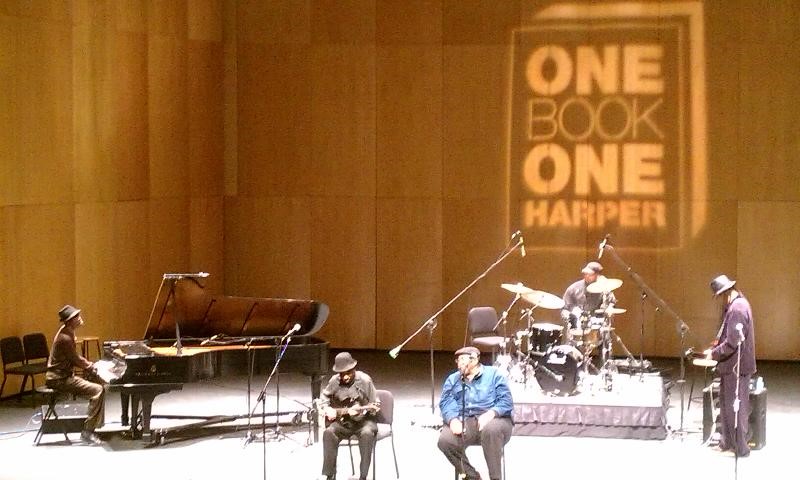
Scott Cashman
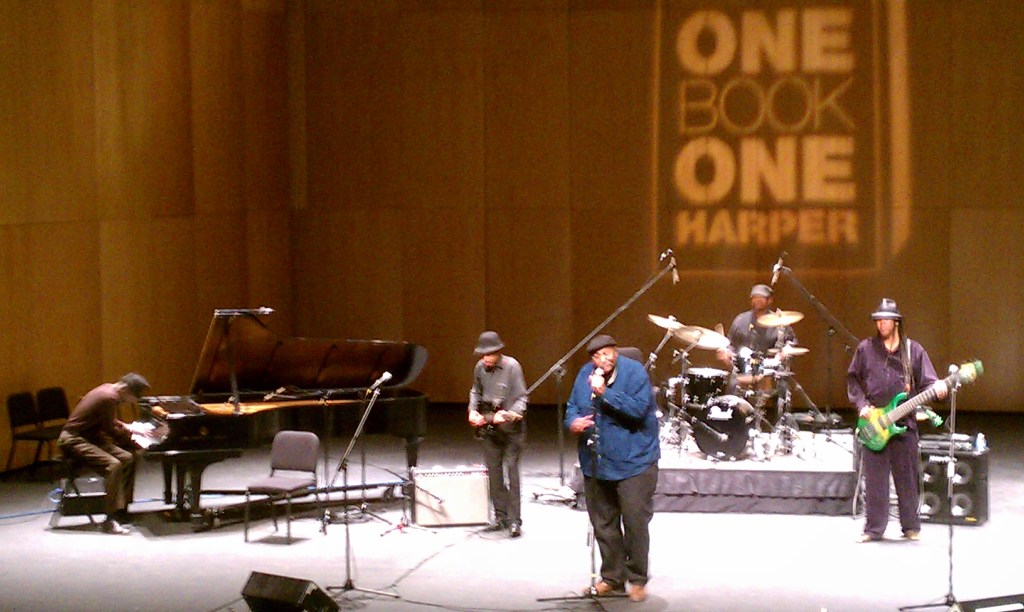
 Dr. Scott's Moonshine Band