
Forward
I’ve had the pleasure of playing with Kelly for 8 years now. Sure, I’ve been on stage with Another Pint, and that’s always intense, but maybe more enjoyable has been all those nights sitting in one of our living rooms playing folk tunes. That brings us all closer to the totality of the American experience. Think back to the days when songsters roamed the countryside, never confined by genre. They mixed what we would now call blues or country or bluegrass or old time. There were ballads and fiddle tunes, transformed jigs and new songs that were America’s version of the broadside ballads – the folk version of newspapers.
“Leadbelly was the consummate songster”, I recently said in a lecture at Harper College. Yes, you’ll find him in the blues section of the record store but to call him a bluesman was limiting. He also loved to sing Gene Autry’s “That Silver Haired Daddy of Mine”! He was what I would call a modern songster because he played the blues along with the filed hollers, jazz hits of the day, Cajun accordion tunes, and country tunes like “Cow Cow Yicky Yea/ Out on The Western Plain”. The songsters that got me the most besides him were the Grateful Dead. Spirituals via Joseph Spence, blues via Willie Dixon and the Reverend Gary Davis, Marty Robbin’s country and Robert Hunter & Jerry Garcia’s modern folk like “Friend of the Devil.” What could be more folk than that collection?
Now mind you, we are talking about “folk” and not the commercial “Folk” with a capital “F” that Baez or Dylan or the Kingston Trio represented in the 1960s, though some of that gets mixed in and added to the folk tradition. These songs were what people played in their living rooms and porches. They passed on their histroy through these songs. Kelly digs deep, back to the Irish roots and through the countryside of America’s south. You might hear the old fiddle tune “Cripple Creek” when you are sitting in our living room. You might hear “Irish Rover”. Kelly is my touchstone for figuring out how that Anglo-Celtic tradition became the Americanized folk tradition. Understand also that the roots of Hank Williams and Johnny Cash and Bill Monroe and Jimmie Rodgers and The Carter Family were African Americans that might be considered blues players. Never underestimate the role of Leslie Riddle on The Carter Family’s success.
So, take the collection that Kelly has given us here and continue your journey through America’s history. We’ll actually travel to the New River again this summer when we make the Henry Reed Festival in Virginia. The folk music thrives there but you get it here, on these pages. Then come join us sometime. There’s a chair waiting for you.
Scott Cashman, Ph.D.
Lake in the Hills Illinois, 2011.
You can buy the book on Amazon
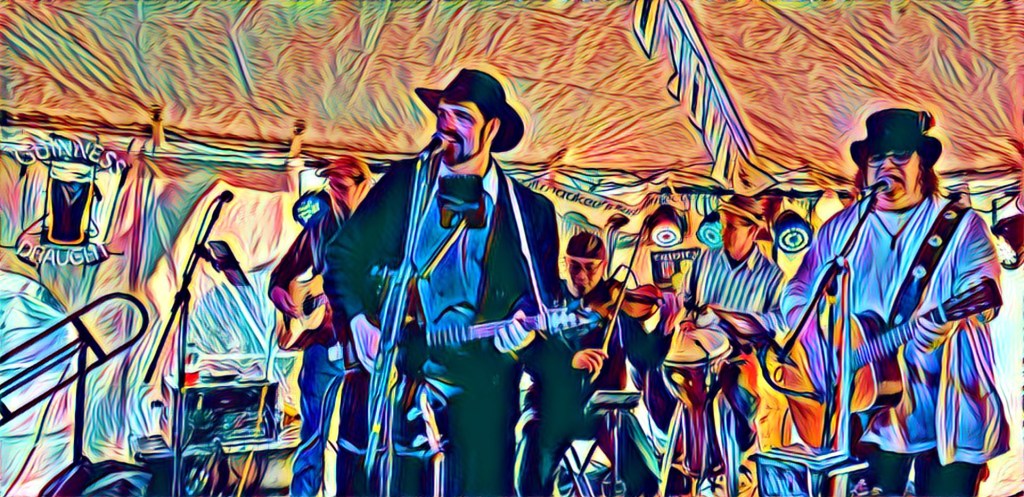

 Dr. Scott's Moonshine Band